
Learning “Lots” about Permeable Pavers to Improve Water Quality
The Town of Groton is evaluating the feasibility of replacing traditional (impervious) pavement with permeable pavement at three Town-owned sites.
What’s the issue?
- Impervious pavement doesn’t let water soak into the ground. When it rains, stormwater quickly runs off these hard surfaces.
- This runoff can increase flooding and affect water quality.
How can permeable pavement help?
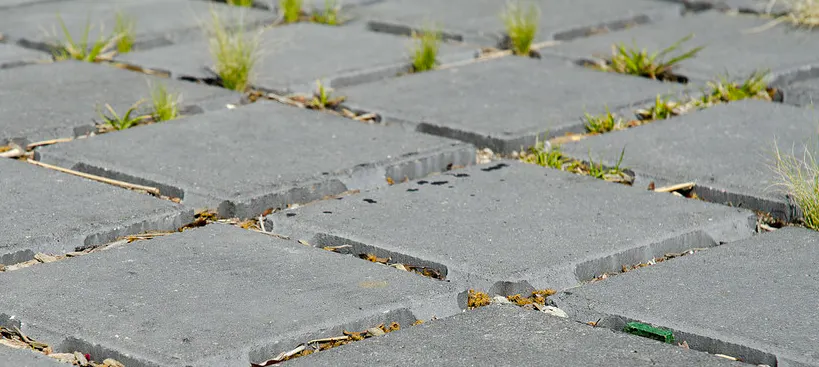
- Permeable pavement looks similar to traditional pavement but is designed to let rainwater soak through the surface and into the ground below, more closely mimicking the way water moves through a natural landscape.
- Benefits include:
- Less stormwater runoff
- Reduced localized flooding
- Groundwater recharge
- More natural drainage
- Healthier streams and waterways
What this project will do
With funding from the National Fish and Wildlife Foundation’s Long Island Sound Futures Fund, this project will:
- Evaluate which locations are good candidates for permeable pavement
- Develop designs for three priority sites
- Create a “how-to” guide that documents the design process and recommendations, so the Town—and other communities—can build on what works
Who’s involved
- Town of Groton staff, including representatives from Public Works, Planning and Development, and Sustainability and Resilience.
- CDM Smith, an engineering and consulting firm with expertise in permeable pavement, is providing technical support and design.
- UConn CLEAR (Center for Land Use Education and Research) is partnering with the Town on education and best practices.
Sharing what we learn
- The Town will host a regional workshop for municipal staff in August 2026 to share project results with other municipalities in southeastern Connecticut. This meeting, while not open to the public, will be recorded and shared on Greater Groton.
- The newest episode of Clean Water Ways, a Groton Municipal Television program created in partnership with Save the Sound, features this project and one of our consultants from CDM Smith, Virginia Roach, Civil Engineer.
Funding & Disclaimer Statement:
This project has been funded wholly or in part by the United States Environmental Protection Agency under assistance agreement LI-00A00694 to the National Fish and Wildlife Foundation. The contents of these project materials do not necessarily reflect the views and policies of the Environmental Protection Agency, nor does the EPA endorse trade names or recommend the use of commercial products mentioned herein.
The views and conclusions contained in these project materials are those of the authors and should not be interpreted as representing the opinions or policies of the U.S. Government or the National Fish and Wildlife Foundation and its funding sources. Mention of trade names or commercial products does not constitute their endorsement by the U.S. Government, or the National Fish and Wildlife Foundation or its funding sources.
-
 Municipal Porous Pavement Site Selection and Design Considerations Regional Workshop
-
 MS4 and Learning Lots

-
Sustainability and Resilience Specialist

Email lnoriega@groton-ct.gov